

Why Tier 3 cities deserve greater attention from retail brands, and how businesses can identify their next growth markets.
India's Retail Growth Story Is Changing For years, India's largest metropolitan cities have been the preferred destinations for retail expansion. Mumbai, Delhi NCR, Bengaluru and other major urban centres offer established customer bases, organised retail infrastructure and access to diverse consumer segments. However, recent retail spending data suggests that businesses should look beyond traditional metropolitan markets when planning their next phase of growth.
According to the Retailers Association of India (RAI) and Innoviti's SANKET reporting, Tier 3 cities consistently outperformed Tier 1 cities in like-for-like retail spending growth during July–September 2026.
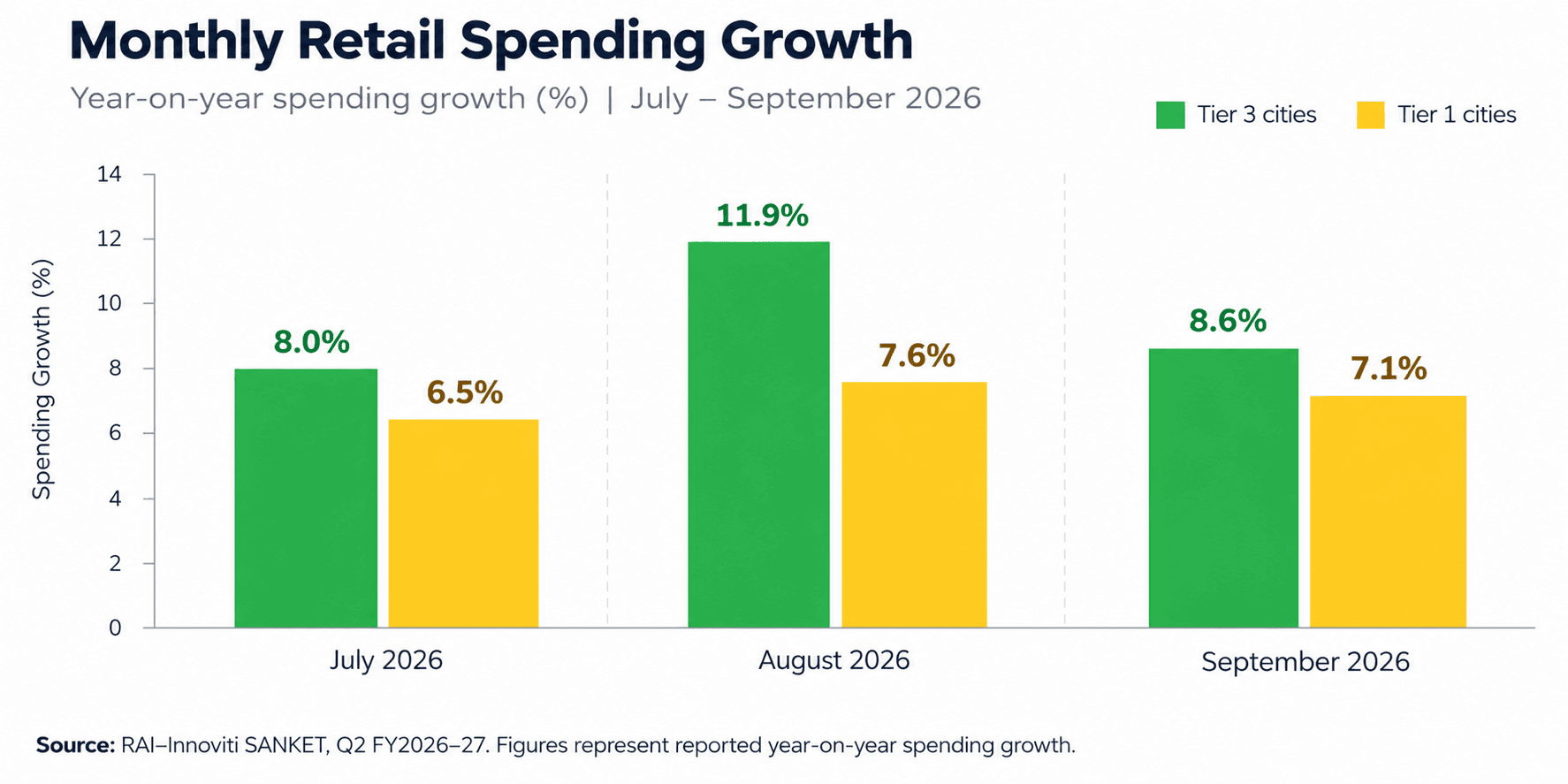
The difference was particularly significant in August, when Tier 3 cities recorded 11.9% growth, outperforming Tier 1 cities by 4.3 percentage points. The smaller-city advantage continued throughout September. These figures provide an important signal for businesses evaluating new markets. However, faster spending growth does not automatically mean that every smaller city offers a profitable expansion opportunity.
The strategic question is not whether brands should abandon the metros, but whether they are overlooking attractive growth opportunities elsewhere.
Why Smaller Cities Deserve Greater Attention
Retail demand varies across cities according to household purchasing power, consumer preferences, category demand, competition and access to products. Smaller cities may offer opportunities for brands that understand these local differences and adapt their strategies accordingly. Three factors deserve particular attention.
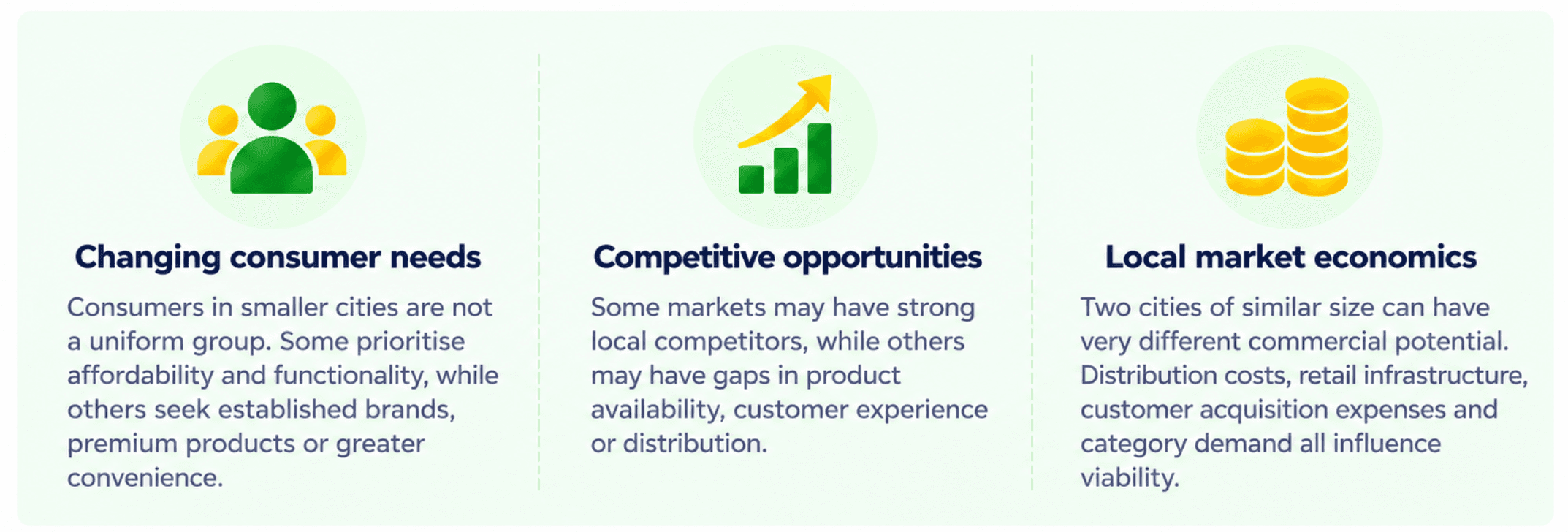
The opportunity lies in identifying specific markets where consumer demand and business economics work together.
What the Wider Retail Data Tells Us
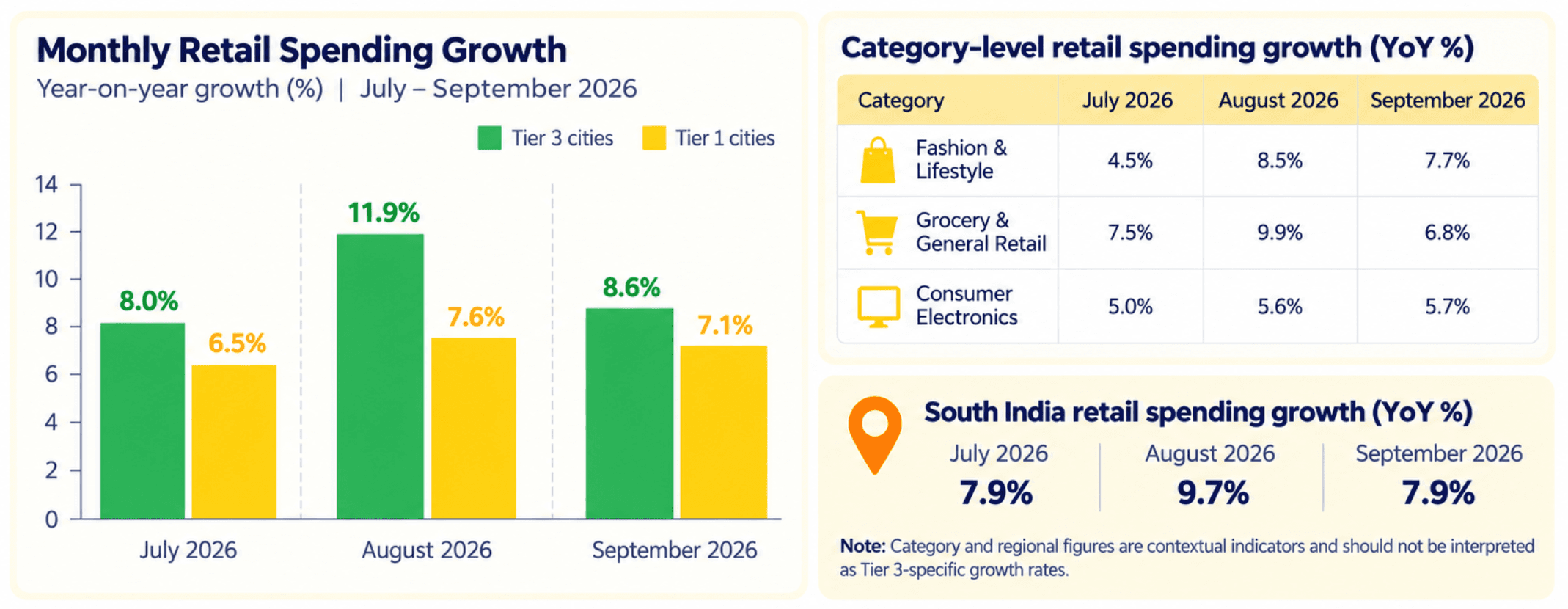
The Tier 3 spending trend becomes more meaningful when viewed alongside category-level and regional performance.
How Should Brands Identify Their Next Growth Markets?
Selecting a city based only on population or recent growth can lead to poor investment decisions. Businesses need to evaluate potential markets against their specific category, target customers and operating model.
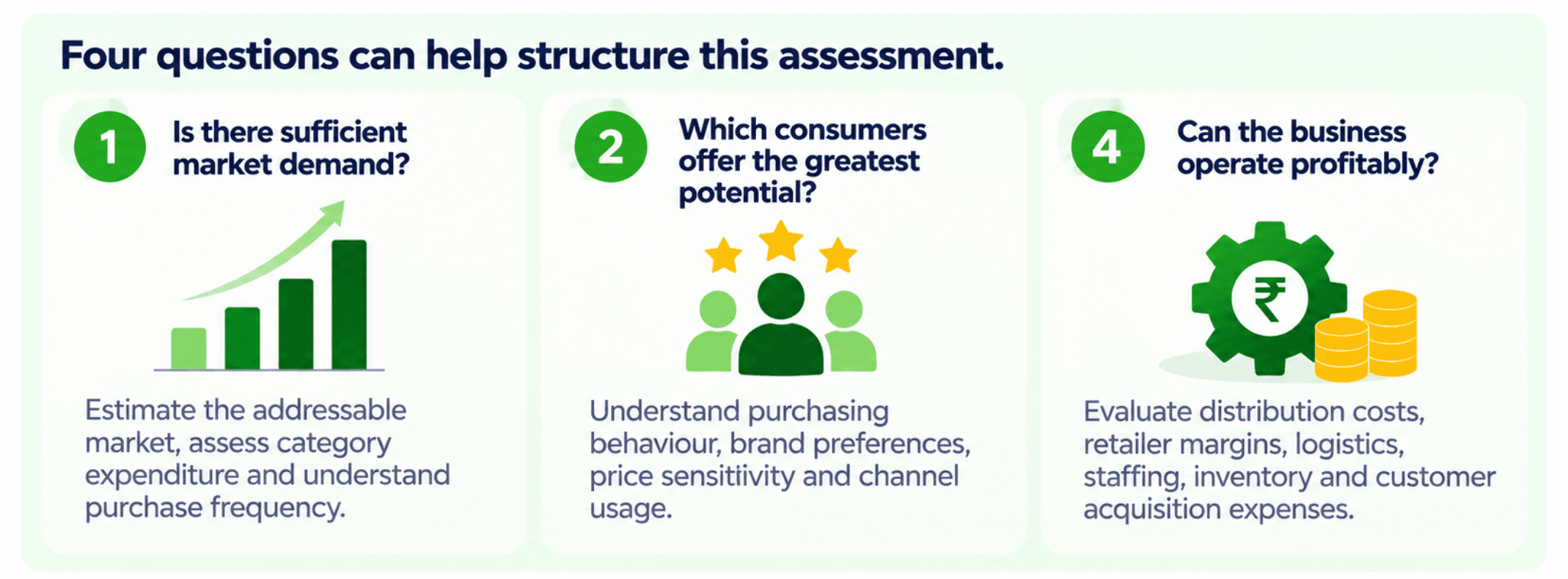
The best expansion market is not necessarily the fastest-growing one. It is the market where demand, competitive positioning and operating economics support sustainable growth.
Why Consumer Intelligence Matters
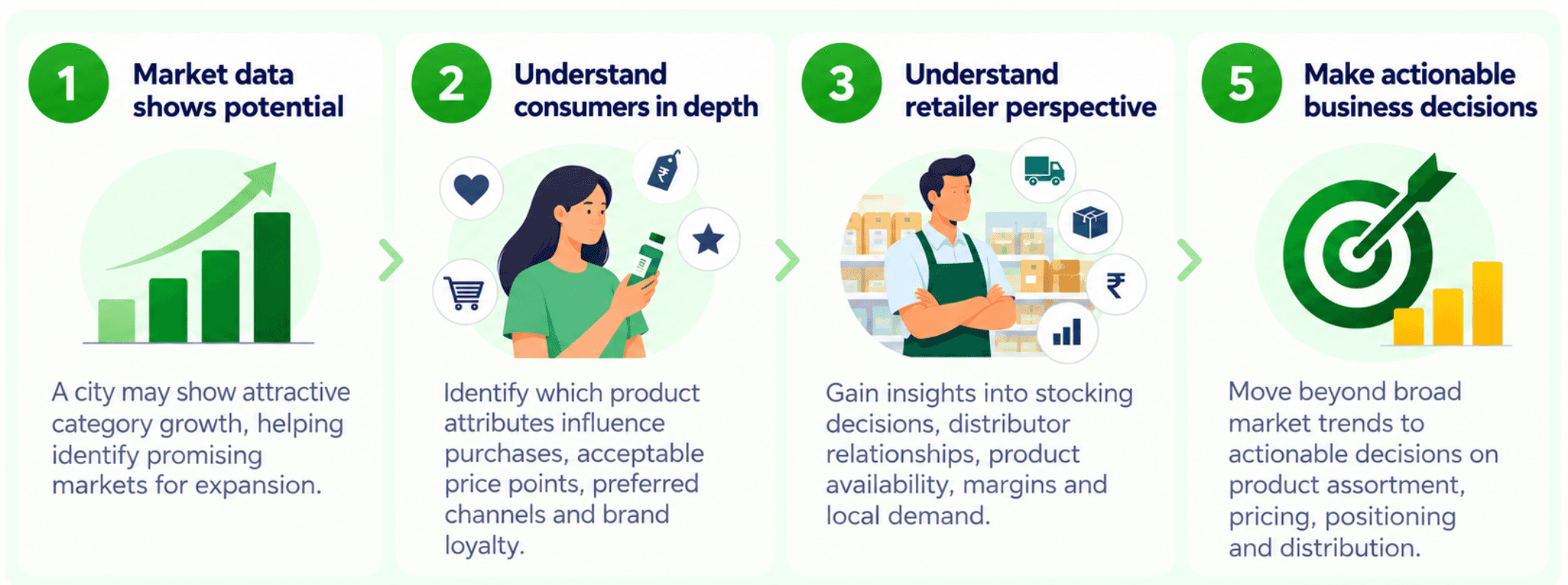
Market-level data helps businesses identify promising locations, but it rarely explains the complete story behind consumer decisions. Consumers and retailers research provides the deeper insights needed for actionable growth strategies.
Electroyuva's Perspective: Turning Retail Growth into Business Opportunity The growth of Tier 3 retail markets presents an opportunity, but identifying the right markets requires more than tracking spending numbers. Businesses need to understand which consumers are driving demand, what they are buying and whether the opportunity can translate into profitable growth.
At Electroyuva, we believe successful market expansion begins with understanding three things: the market, the consumer and the competition.
- Market potential: Identify cities with attractive category demand, assess market size and evaluate the factors that could support future growth.
- Consumer understanding: Examine purchasing behaviour, price sensitivity, brand preferences and unmet needs to identify the customer segments with the strongest potential.
- Competitive positioning: Understand existing brands, local competitors, distribution gaps and opportunities to differentiate the offering.
- Expansion feasibility: Evaluate distribution channels, retailer expectations, operating costs and commercial viability before committing to investment.
Combining market data with consumer and retailer research helps businesses make more informed decisions about where to expand, whom to target and how to compete.
The objective is not simply to enter faster-growing markets. It is to identify markets where a brand has a clear opportunity to win.
Growth Starts with Better Market Decisions
India's latest retail spending trends provide a compelling reason for brands to broaden their expansion strategies. During July–September 2026, Tier 3 cities consistently outperformed Tier 1 cities in like-for-like retail spending growth. However, sustainable growth requires more than identifying a promising trend. Businesses must understand local demand, target consumers, competitive intensity and the cost of serving each market. For some brands, the next opportunity may lie in entering emerging cities. For others, it may involve strengthening distribution, adapting product offerings or improving the customer experience in existing markets.
The real question is not simply where retail spending is growing. It is where your brand can grow profitably, which consumers it should prioritise and what it will take to win.
Electroyuva helps businesses turn consumer and market intelligence into informed growth strategies.
Electroyuva | Consumer Intelligence. Market Understanding. Business Growth.
Source: Retailers Association of India and Innoviti Technologies, SANKET reporting for Q2 FY2026–27, published October 2026. RAI Knowledge Reports.
Data note: Spending growth figures are reported year-on-year, like-for-like rates. They indicate changes in spending at existing stores, not total market size or forecasts of future growth. Businesses should validate city-specific opportunities before making investment decisions.